Pictures are to scale: 1 cm is approximately 10 pixels.
If you have any corrections, additions or remarks to any of the plates or their descriptions,
please e-mail me.
Because it is not always clear whether plates for military forces stationed abroad are technically issued by the home country or the host country, I decided to put those plates into a special category aside from the countries. Please note that all United Nations plates are shown in the United Nations country section.
| Allied Forces in Central / Northern Europe, Netherlands | |
|
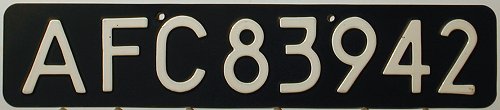
Personnel attached to AFCENT, pre-1992 series. |
|
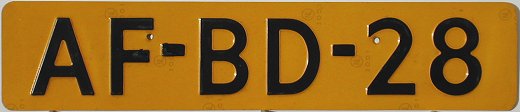
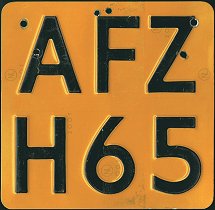
Personnel attached to AFCENT, 1992-1999 series car and motorcycle plates. |
|
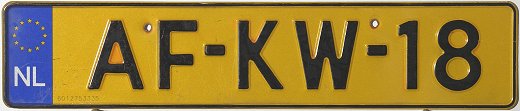
Personnel attached to AFNORTH, 2000-2003 series car. |
| NATO Région Centrale, Headquarters in the Netherlands | |
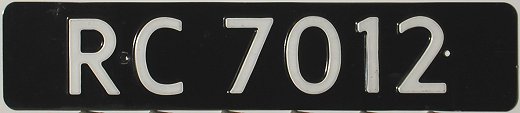 |
Pre-1998 official vehicle plate. |
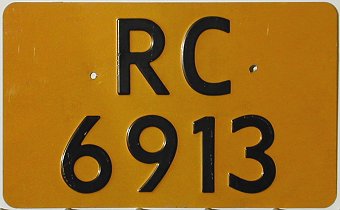 |
1998-2000 official vehicle plate. |
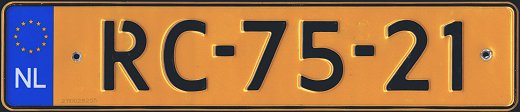 |
2000 onwards official vehicle plate. |
| Allied Forces in Greece | |
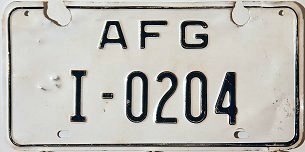 |
1979 onwards private vehicle plate, I = Iraklion. |
| Allied Forces in Italy | |
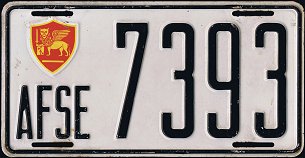 |
1956 to 1968 series private vehicle plate, AFSE = Allied Forces in Southern Europe. |
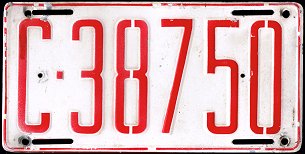 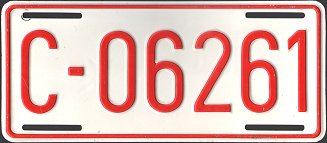 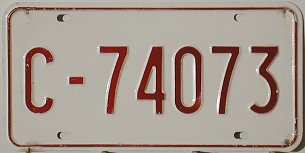 |
1956 to 1968 series plates for official vehicles. The two top plates are in older style, the bottom plate uses the dies that were introduced in the District of Columbia in 1966. It was used on a vehicle based in Livorno. |
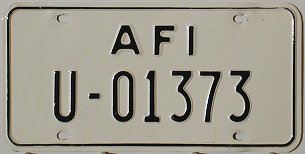 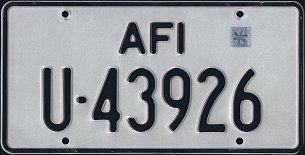 |
1968 onwards private car plates, U = Udine customs district. The first vehicle of a force member is tax free and has white plates. |
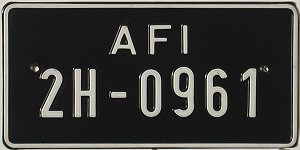 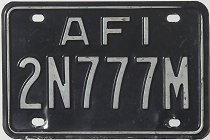 |
1968 onwards private car and motorcycle plates, H = Cagliari, N = Napoli customs district. Additional vehicles are subject to Italian taxes and receive black plates with the number 2 before the base code letter. Motorcycle plates are smaller and have an M suffix. |
| Supreme Headquarters of Allied powers in Europe | |
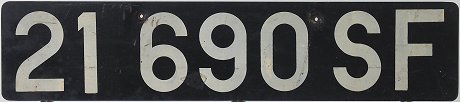 |
SHAPE Fontainbleau (France) personnel plate, series until 1968. In that year France left NATO and SHAPE was moved to Brussels. |
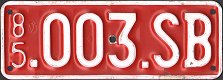 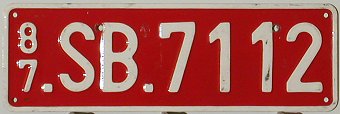 |
SHAPE Belgium personnel plates for motorcycles and cars, annualy issued series from 1968 to 1991. |
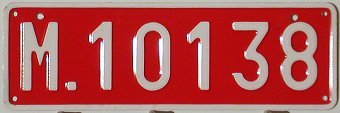 |
SHAPE Belgium personnel plate, 1992 to 1994 permanent series. From 1995, SHAPE personnel received normal Belgian temporary plates. |
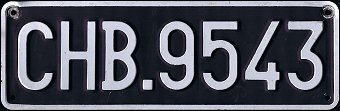 |
1985 onwards SHAPE official vehicle plate. The letters stand for Casteau, Hainaut, Belgium, where the organization is headquartered. |
| Belgian forces in Germany | |
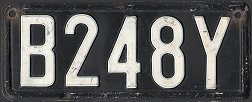 |
1958-1962 style private vehicle plate. |
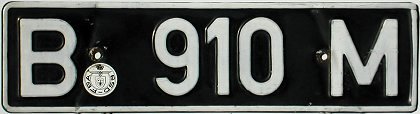 |
1962-2007 style private vehicle plate, using German dies and a seal. |
| British forces in Germany | |
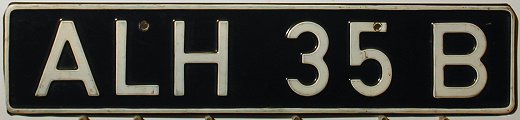 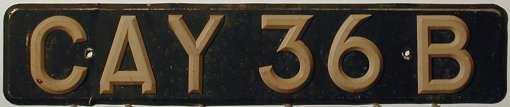 |
1982-1988 series private vehicle plates. These plates were usually made in German style, but white on black. The second plate is a much rarer variety in British style. Since 1988, British forces have used normal British civilian plates. |
| British Sovereign Base Areas in Cyprus | |
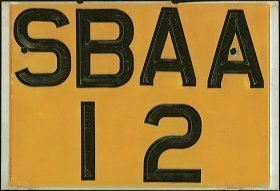 |
When Cyprus became independent in 1960, Britain retained two military base areas totalling 254 km2 under its sovereignty. British military vehicles there have their normal domestic registrations, while privately owned vehicles have normal Cypriot plates. Special SBAA plates are issued to vehicles of the administration of the area, including civilian police vehicles. |
| Canadian forces in Europe | |
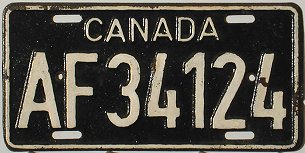 |
1963-1969 series for Canadian Air Force personnel. AF3 = 3 Wing stationed in Zweibrücken, Germany |
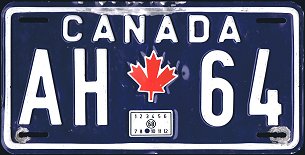 |
1968-1969 series for Canadian Army personnel. The expiration sticker is for 1968. |
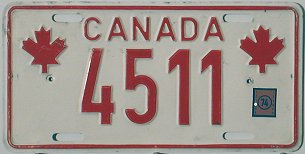 |
In 1970 a unified series for all Canadian forces in Europe was introduced.
1970-1985 private car series. Early numeric-only plate. The expiration sticker is for 1974. |
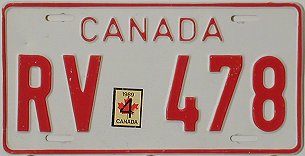 |
1985 onwards private car series. The expiration sticker is for 1989. |
| French forces in Germany | |
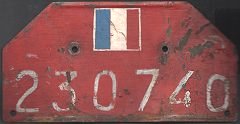 |
Official motorcycle plate, probably from the 1950s or 1960s. |
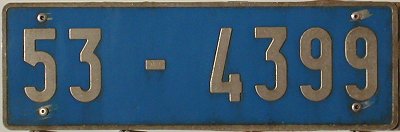 |
Current series for private vehicles. Second digit 3 = Landau/Pfalz (issued until 1999). |
| German forces in France | |
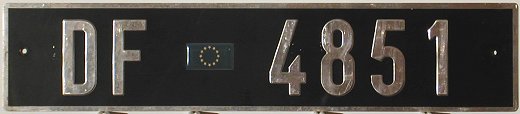 |
Current private vehicle plate. DF 4xxx = Eurocorps. |
| German forces in the Netherlands | |
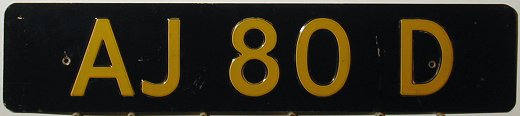 |
Current private vehicle plate. |
| Netherlands forces in Germany | |
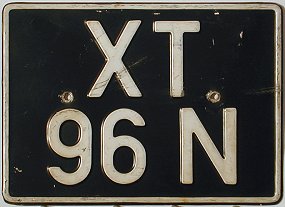 |
Pre-1975 private vehicle plate. |
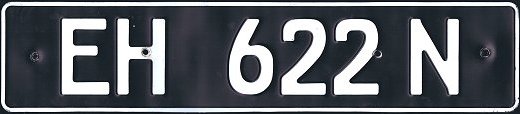 |
1975 onwards private vehicle plate. The E series started in 1997. |
| United States forces in Austria | |
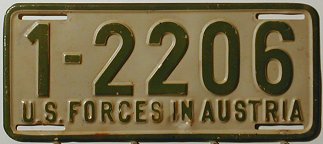 |
US forces were stationed in Austria until 1955. Private vehicle plates were issued annually in varying colors. This plate is from 1954, 1 = Salzburg. |
| United States forces on the Azores | |
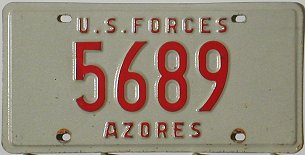 |
Pre-2006 private vehicle plate. |
| United States forces in Cuba | |
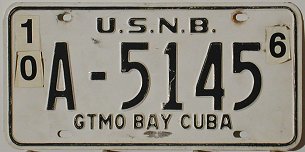 |
United States personnel in the U.S. Naval Base Guantanamo Bay receive these plates for use within the base. This plate style was introduced in 1978. The stickers show an expiration in October 1986. |
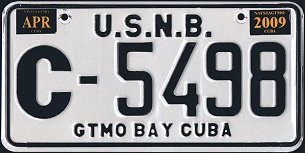 |
This plate style was introduced in the 1990s. The expiration stickers are now much more professional. |
| United States forces in Ethiopia | |
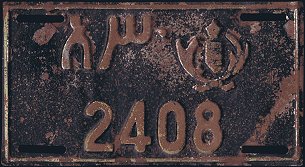 |
1967-1975 privately owned vehicle plate. |
| United States forces in France | |
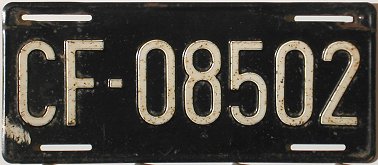 |
1954-1958 series private vehicle plate. |
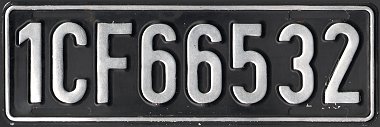 |
1958-1961 series private vehicle plate. |
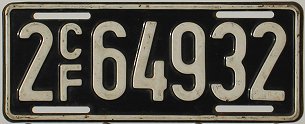 |
1961-1968 private vehicle plate. This is the last series, since U.S. Forces left France in 1968. |
| United States forces in Germany | |
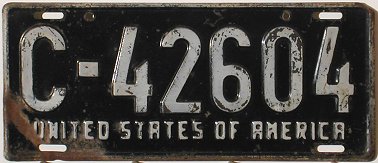 |
1948-1949 private vehicle. This is the only U.S. plate series ever that had the country name spelled out. |
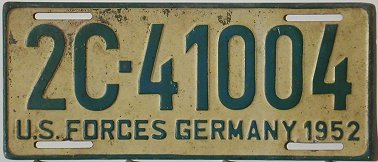 |
1952 private vehicle plate. |
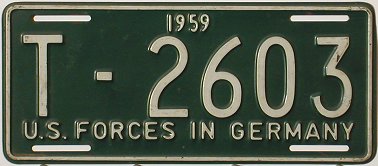 |
1959 private vehicle plate. This was the last large size plate, which is interesting, because in the United States proper, all states had to switch to 12" plates by 1956. |
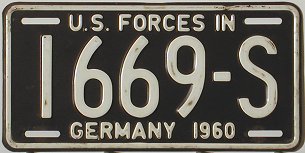 |
1960 private vehicle plate. Actually, the background color is brown, but my camera insisted on making it black. |
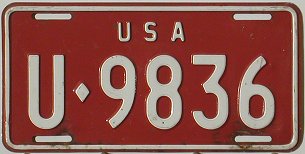 |
1962-1966 private series. The year sticker was on the windshiled during this period. |
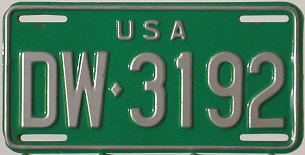 |
1966-1973 private series. The year sticker was on the windshiled during this period. |
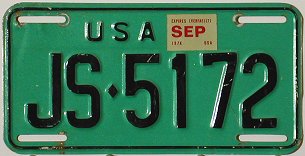 |
1973-1982 private vehicle plate. In this series, the expiration sticker moved back to the plate. |
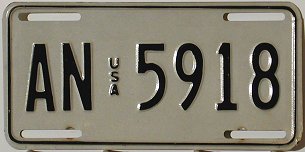 |
1982-1990 series. To make U.S. Forces cars stick less out in traffic, the color was changed to black on white as on German plates, and the letters USA were reduced in size. The expiration sticker was moved back to the windshield. |
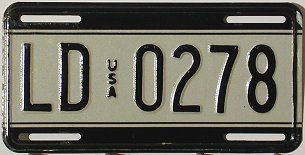 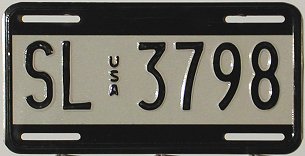 |
1990-2000 series. In an effort to make the plates look even more European, black stripes were added on top and bottom. Earlier plates had an additional thin black line mimicking a painted raised border. This was discontinued on later plates. |
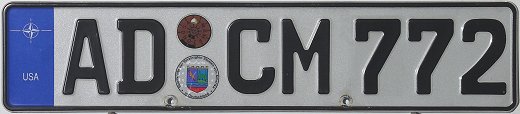 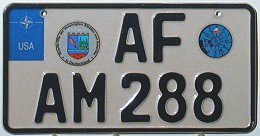 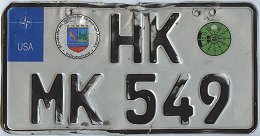 |
2000-2005 final series. One line plates had the letters AD. Two line plates initially had the letters AF, but changed to HK shortly after their introduction. Motorcycles received two line plates, with the letter M as first character on the second line.
Because of fear of attacks on American personnel in Germany, US forces plates were completely redesigned from the previous American style. They used German plate sizes and dies. However, the blue band at the left showed the NATO symbol and the letters USA, and a special authority sticker resembling those on German plates was designed. The previously rectangular validation sticker resembled the German inspection sticker and was moved from the windshield to the plate. The plates had code letters not used in the German system to avoid confusion. There were two styles: If possible long one line plates were issued. American specifications cars received two line tractor size plates, which are slightly smaller than standard American plates. In December 2005, is was decided that these plates were still not inconspicious enough. At that time an agreement was reached with the German government that US forces private vehicles receive normal German civilian plates, while still paying no German taxes. The plates shown here were phased out until November 2007. |
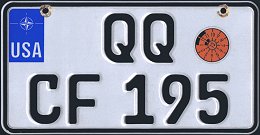 |
2011 onwards shipping plate. German civilian plates have to be surrendered to the German authorities before a vehicle is shipped back to the US. Since 2010 such vehicles are issued with temporary plates in the style described above starting with the letters QQ (previously SH was used). In 2011 the authority sticker was abandonned in favor of bigger letters USA in the blue band. |
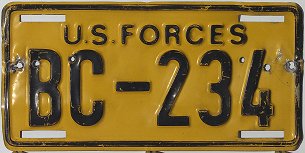 |
Official vehicle of the U.S. Forces. BC = Berlin Command, used until around 1990. |
| United States forces in Iceland | |
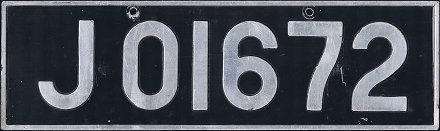 |
Pre-1979 series plate. J Keflavik Airport, leading zero = U.S. civil staff. |
| United States forces in Japan | |
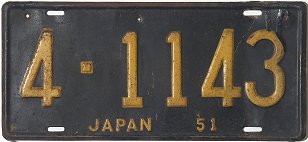 |
1951 private vehicle plate. Until 1952, US personnel in Japan were issued annual American style plates. |
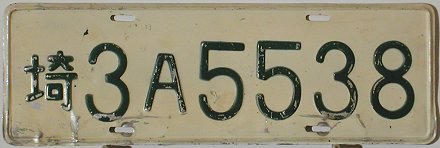 |
1953-1955 series private vehicle plate. 埼 = Saitama prefecture, 3 = large car, A = imported vehicle. These plates looked like normal Japanese plates, but the hyphen after the vehicle class code was replaced with a western letter. |
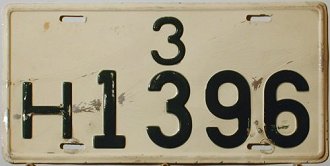 |
1955-1962 series. The absence of the Kanji letters means that the plate is from Tokyo, 3 = large car. While normal plates had a Japanese serial character at the start of the second line, U.S. Forces plates had a western letter there. |
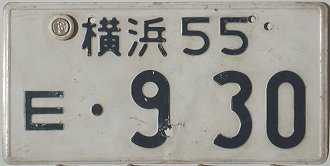 |
Current Series from 1971. 横浜 = Yokohama, 55 = car 551-2000cc. These plates look like normal Japanese plates, but the serial letter at the start of the second line is western, not Japanese. Note the seal covering the left bolt hole. This is to prevent the plate from being moved to another car, because it has to be destroyed in order to reach the bolt. In this case, however, additional holes were drilled into the plate so that it could be mounted onto an American car. That way the seal remained intact. |
| United States forces in Japan (Okinawa) | |
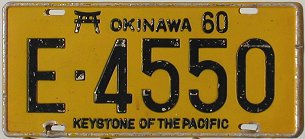 |
Okinawa was administered by the United States until 1972, and then returned back to Japanese control. The United States issued distinctive plates for their personnel. This one is from 1960. E = enlisted man (there was also O for officers and C for civilian employees). |
| United States forces in Korea | |
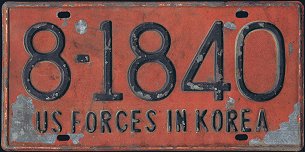 |
Older plate, most likely issued by United States authorities, before the Korean issued series commenced. |
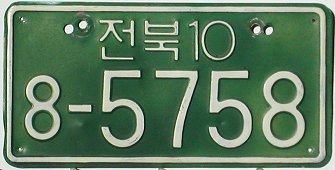 |
Late 1970s private car plate. 전북 = Jeolla-buk province. These plates look similar to normal Korean plates, but the Korean serial letters at the start of the second line are replaced with a numeral. |
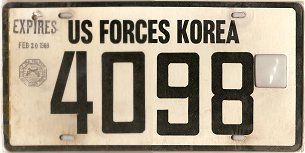 |
Temporary exit plate expiring Feb. 20, 1989 issued by the United States to US forces vehicles leaving Korea. The normal Korean issued US forces plates have to be surrendered before the vehicle leaves the country. These US issued plates enable the vehicle to be used until new plates are issued in the country of destination. |
| United States forces in the Netherlands | |
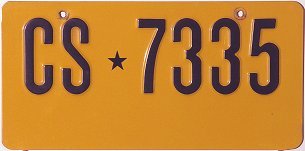 |
Pre-2005 official vehicle plate. The numbering format conforms to the one used on standard US army plates, so I assume these are normal series US army plates made in Netherlands style to stick out less. |
 |
2005 onwards official vehicle plate. 12 = issued in 2012, SC = Schinnen Base. |
| United States forces in the Pilippines | |
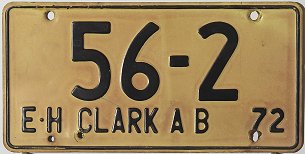 |
1972 private vehicle plate from Clark Air Base. E = tax exempt, H = heavy car. |
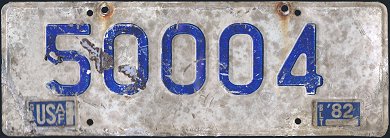 |
From the 1980s until 1992, when all US forces left the Philippines, official vehicles used plates from the Philippines non-diplomatic series in the 50000s block. |
| United States forces in Spain | |
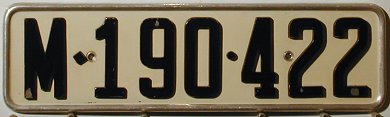 |
Pre-1972 private vehicle plate. U.S. Forces personnel were issued with normal Madrid plates, but always with a zero at the 1000s place. |
| United States forces in Turkey | |
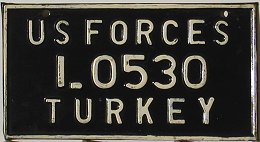 |
Early 1960s private vehicle plate. |